
Data Centers: Just The Basic Facts
When you use an AI chatbot, watch an online video, back up a photo, or even send a text message, it is usually a data center that handles it behind the scenes. Even though most of us never see them, these campuses silently support our everyday lives.
Knowing what a data center is and what sets them apart from other facilities will help us understand why they are becoming increasingly important.
What Is a Data Center?
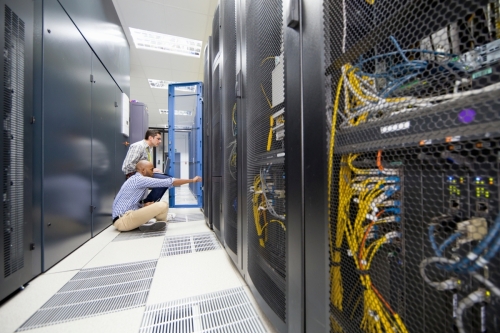
Data centers are campuses that house computing equipment used to process data and run servers. The primary elements are of data centers are networking devices, cooling and power supply systems. Simply put, a data center is where the “cloud” exists physically. Whenever something is referred to as “the cloud,” in reality, it is just a file stored on a server in a building.
Data centers can vary from one room in an office building to large warehouses covering several football fields in size. In any case, the primary function of the data center is data storage and processing using software applications that is available 24/7.
Major Types of Data Centers
As we have written, there are many types of data centers in terms of their functions and customer needs. The following five types cover the majority of existing data centers.
Enterprise data centers
Data centers that are built and operated by one organization for its own internal use. Owners often include large companies such as banks or tech giants that require total control over their data centers.
Hyperscale data centers
These are the largest data centers built by leading cloud providers such as Amazon, Microsoft, or Google. Hyperscale data centers are capable of providing services to millions of users simultaneously. If we save a file to Google Drive or watch a movie online, there is a chance that one or more hyperscale data centers are handling your requests.
Managed data centers
Here, an outside company owns and runs the facility, then leases server space and IT services to a client. A hospital or law firm might use a managed center to store sensitive patient or client records without managing the technology itself.
Colocation data centers
In this setup, a company owns its own servers but pays a facility to house them. The company handles its own equipment, while the facility provides the space, power, cooling, and physical security.
Functions of Data Centers
All data centers, regardless of type, perform many common tasks:
Storage
The storage capacity of the data center may range from storing personal photos and financial records of businesses to hospital charts and may include various backup copies in case of equipment failure.
Processing
The servers located in the data center execute computations for websites, mobile applications, and now for artificial intelligence models. When a result of some operation from an artificial intelligence is delivered to us—all this computing is performed by the servers in a data center.
Networking
The data center is interconnected with the Internet and other data centers, thus routing all information between users and the servers.
Security
There are physical and digital security measures to protect the hardware and the data stored there. The physical ones include fences and secure entrances. Digital security includes firewalls and encryption.
Reliability
There are generators and battery systems, as well as backup cooling, which guarantee that the data center remains functioning during outages or equipment problems, because even a brief interruption might affect thousands of people simultaneously.
The Increasing Number of Data Centers
With the growing demand for cloud storage services, streaming, and artificial intelligence, more and more data centers have been constructed of late, including many that are located in South Carolina.
Data centers have become an integral part of the nation’s infrastructure, just like energy and telecommunications. With more and more aspects of people’s lives being transferred to the Internet, data centers will become even more essential to the functioning of life and work.
The Connection Questions
Data Centers run on electricity…a lot of it.
Servers require constant power, and the equipment that cools them uses even more. A single hyperscale data center can draw as much electricity as a small city, and that demand runs around the clock, not just during peak hours like a typical home or business.
That scale of power use is why data centers have become part of the conversation about energy in South Carolina and beyond. As more centers come online, utilities must plan for higher demand on the electricity grid, which raises questions about who pays for new power infrastructure and how quickly it can be built. Some companies are responding by investing in their own power sources, from natural gas plants to small modular reactors (SMRs), to help meet the needs of a single facility.
This investment has a huge upside. New substations, transmission lines, and generation capacity built to serve a data center often add resilience for the surrounding grid, not just the facility that asked for it. Data centers also generate substantial property tax revenue for their host counties, often with little added strain on roads or public services, because they produce none of the traffic or pollution associated with a factory. That revenue helps pay for schools, first responders, and local infrastructure, while the facilities themselves create skilled, well-paying jobs in construction, IT, and electrical work.
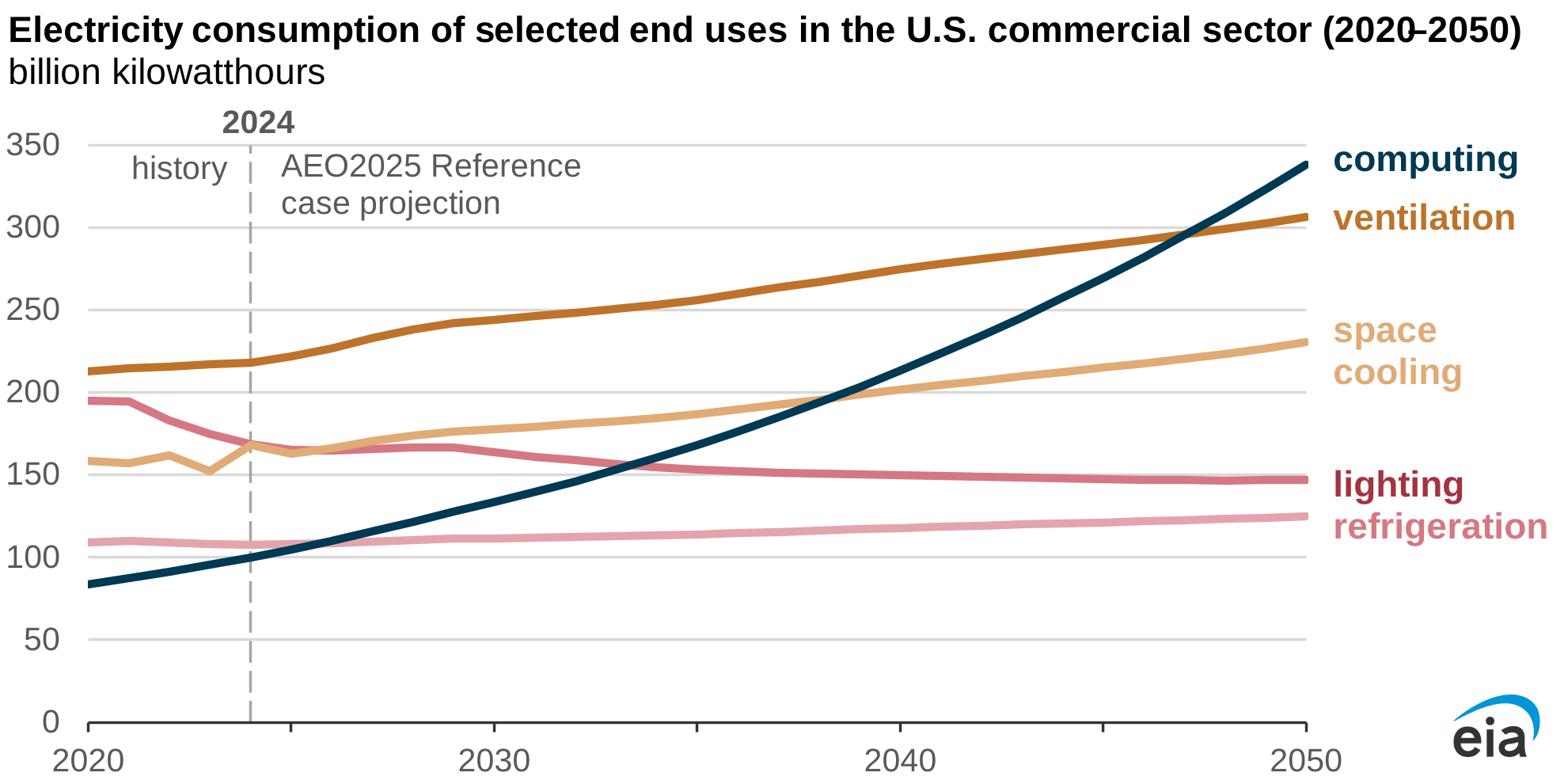
Data source: U.S. Energy Information Administration, Annual Energy Outlook 2025 Reference case
Data values: Commercial Sector Key Indicators and Consumption
There is a security dimension to the energy conversation as well. Where data is physically stored matters. Data housed in a domestic facility falls under federal law and is subject to federal oversight, unlike data stored in a foreign country, which can be accessed or compelled by a foreign government under its own laws. Building enough domestic power capacity to support American-owned and American-based data centers helps keep sensitive information, from personal records to national security data, out of the reach of foreign adversaries.
In short, the growth of data centers is not just a technology issue; it is an energy issue, a national security issue, a free market issue, and a community issue. It is about real costs and real benefits to weigh, from local jobs and tax revenue to keeping American data on American soil.