Kirk was Assassinated Exercising a Fundamental Right
During my college years at Clemson, I was not on the debate team, but I found myself doing my share of public debating. There was that absolute disaster when a friend and I were tricked into debating a traveling group from the United Kingdom in Oxford Union style. Those British college students (who seemed so much more mature than we) wiped the floor with us. It should have been a clue to us when they didn’t seem to care which side of “This House believes…” they were assigned that evening.
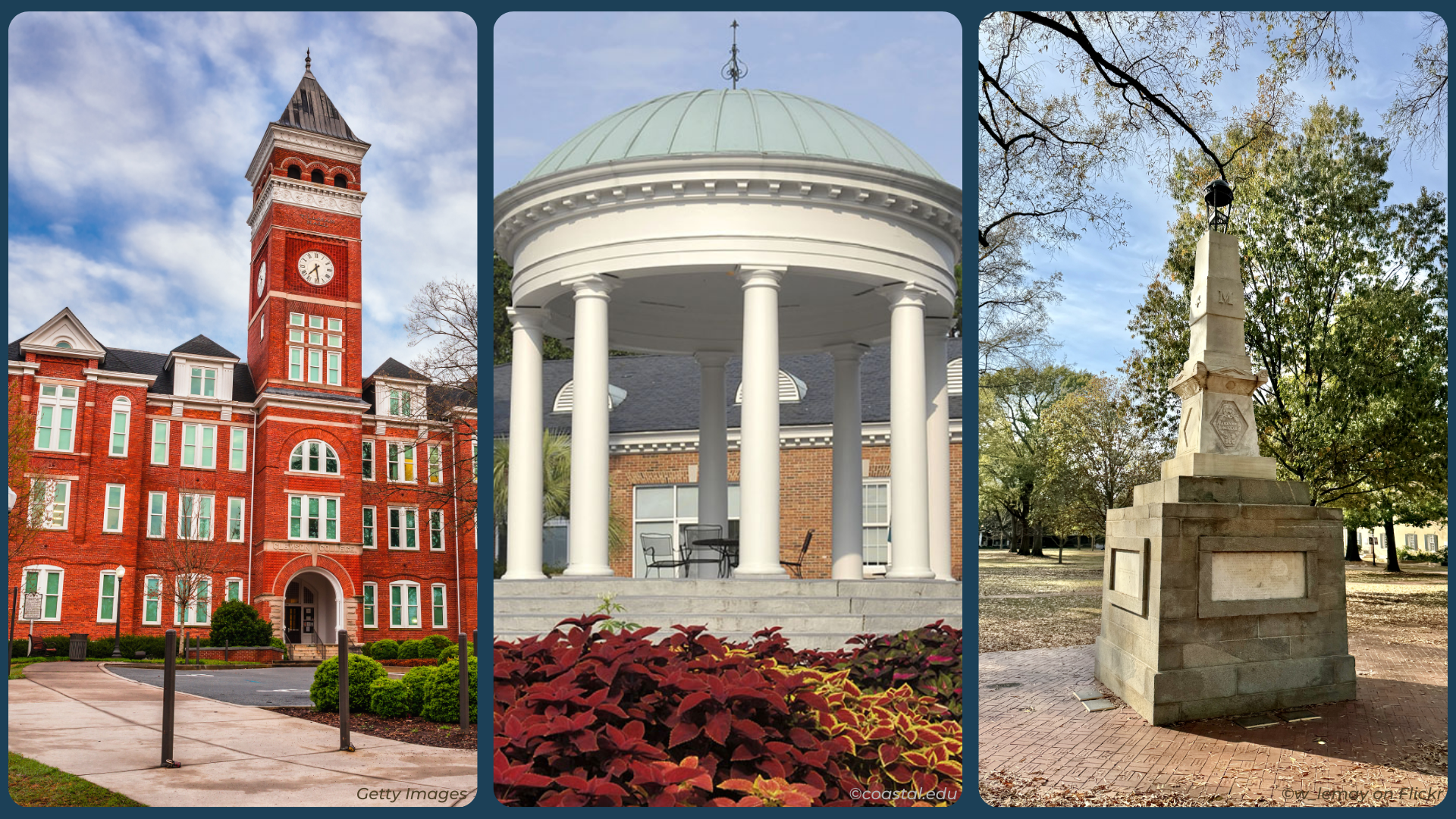
The most engaging and fun was a Republican versus Democrat forum scheduled immediately before the presidential election that year. The debate was sponsored by The Tiger, the student newspaper, and we students represented the two parties. The Tiger sent a photographer that night, who supplied me afterward with a half dozen black and white 8×10 glossies documenting my turgid explanation of the wonders of the free market and “peace through strength” that night in Tillman Hall Auditorium. I cannot imagine what we would have said if someone had told us that by appearing that night, our lives would be in danger!
It is my belief in the power of debate that has led me to champion free speech policies in my role both as Senior Fellow at Palmetto Promise Institute and as a Trustee of South Carolina’s third-largest public university, Coastal Carolina. One of our Coastal strategies for demonstrating our embrace of open debate was the official endorsement of The Chicago Statement (the Report of the Committee on Free Expression) of July 2014.
That Statement contains so many gems. Among them are quotes from two Chicago Presidents:
- President Edward H. Levi, in his inaugural address [in the bloody year of 1968], celebrated “those virtues which from the beginning and until now have characterized our institution.” Central to the values of the University of Chicago, Levi explained, is a profound commitment to “freedom of inquiry.” This freedom, he proclaimed, “is our inheritance.”
- President Hanna Holborn Gray observed that “education should not be intended to make people comfortable, it is meant to make them think. Universities should be expected to provide the conditions within which hard thought, and therefore strong disagreement, independent judgment, and the questioning of stubborn assumptions, can flourish in an environment of the greatest freedom.”
There have been eras of political murders in world history. America in 1968 comes to mind for sure. Japan in the 1920s and 1930s. But I fear that we will no longer be the same after 2024-25. Something appears to have snapped in America.
I have no wisdom to assuage the sick feeling we all feel in the wake of the events at Utah Valley University about midday yesterday. But maybe I’m not alone. Just a few moments ago, on a virtual meeting about economic policy, the host introduced the call by providing an opportunity for anyone to share thoughts on the murder of Charlie Kirk. But those several dozen individuals, who essentially talk for a living, sat in silence, looking forlorn. I finally mustered the ability to type into the chat: “I have no words.”
Just a couple of years ago, Baz Luhrmann’s Elvis film appeared. One of the events it attempted to capture was the 1968 NBC Special. Though it aired at Christmastime, it was filmed during the era of the murders of Martin Luther King (April 4) and Bobby Kennedy (June 6). To express the pain Elvis was feeling, the producers of the show commissioned William Earl Brown to write a song to replace “I’ll Be Home for Christmas” to wrap up the show. The theology of “If I Can Dream” is far from orthodox, but it clearly expressed a yearning to be free from being “lost in a cloud with too much rain” that 1968 represented.
As we think of 2024-25, let’s not give in to the melancholy. In remembering a very young man who died doing what he loved, debating on a university campus, let’s commit ourselves once again to freedom of expression in public life, especially in college life. As that University of Chicago President said, “freedom of inquiry is our inheritance.”
Charlie Kirk guarded that freedom with his life, and so should we.