
Powering the Palmetto State: A Market-Driven Solution to Our Looming Energy Crisis
As we all know, energy demand is a pressing issue for South Carolina. According to EIA data, South Carolina energy rates went up more than 9% last year and show no sign of slowing down. That being said, South Carolina has historically boasted energy rates below the national average, a trait that makes it very attractive to both manufacturers and residents.
Recently, PPI laid out a case for Small Modular Reactors (SMRs) as a primary solution to this looming capacity crisis. SMRs are smaller nuclear reactors that offer a way to generate carbon-free power on-site.
While SMRs may come to represent a lasting core part of the state’s grid, the immediate timeline of our energy crunch requires a multi-pronged approach. One part of that approach may be decentralized, rapidly deployable hydrogen fuel cells (HFCs) that can relieve grid pressure today.
What are HFCs (in simple terms)?
Hydrogen fuel cells are electrochemical generators that convert stored hydrogen into electricity. They are efficient, quiet, produce zero emissions, and allow for fast refueling.
Why HFCs for South Carolina?
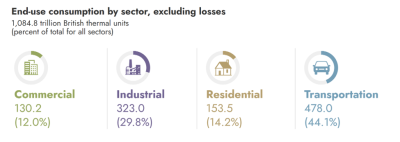
If we look at end-use consumption in South Carolina, we see that the sectors leading in energy consumption, transportation (44.1%) and industry (29.8%), are both fantastic candidates for implementation of Hydrogen Fuel cell energy. Major vehicle manufacturers like Toyota, Hyundai, and Honda are already developing vehicles that use hydrogen to travel farther distances with less energy. Broadly, the industrial sector already utilizes HFCs in oil refineries, ammonia, methanol, and steel production, so with South Carolina’s large share of industrial energy use, there is a large overlap and potential for HFC implementation.
Understanding how HFCs complement SMRs requires weighing the distinct pros and cons of both technologies:
Small Modular Reactors (SMRs) provide massive scale but face long lead times. The primary advantage of SMRs is their sheer output and reliability. A single SMR can power a massive industrial hub or a cluster of data centers 24/7 without relying on the weather. However, nuclear energy faces a gauntlet of federal regulatory approvals, high upfront capital costs, and public skepticism. Even under the most optimistic state legislative timelines, South Carolina’s first operational SMR is likely a decade or more away.
Hydrogen Fuel Cells can be deployed immediately but require external fuel sources. Unlike SMRs, which generate new power from scratch. Their advantage is that they can be deployed by private businesses in months rather than years, require zero nuclear regulatory oversight, and can scale from small forklift fleets to large backup generators. The con is that hydrogen is an energy carrier, not a primary energy source. To run them, South Carolina must establish a reliable supply of hydrogen fuel, which itself requires energy to produce. Additionally, HFC development can be expensive, but EIA data suggests that hydrogen production costs from renewable energy could fall 30% by 2030.
Ultimately, these two technologies can work together as partners. SMRs are the ultimate long-term grid solution, while hydrogen fuel cells provide an immediate way to ease energy demand.
BMW’s facilities have already proven this works on a massive scale in an industrial setting, using hydrogen to power plant logistics for over ten years. By utilizing hydrogen-powered manufacturing equipment on its factory floors, BMW’s automotive plants demonstrated a viable path toward reducing reliance on an already overtaxed public grid. Beyond successful implementation, the workers involved with HFC production actually support it. Current assessments of South Carolinian HFC workers clearly indicate that working with HFC technologies is an overwhelmingly positive experience.
HFCs could also solve the backup power problem for new tech investments. A single modern data center can use as much power as 100,000 homes, meaning these facilities require absolute power redundancy. Historically, they relied on massive diesel generators, which pose both environmental and permitting issues. HFCs provide clean, reliable, on-site backup power.
Between the Savannah River National Laboratory and our research universities, South Carolina already has a strong foundation of hydrogen expertise. The state legislature also has an established tax exemption for hydrogen infrastructure.
The real bottleneck now is regulatory speed and hydrogen supply. Just as with SMRs and other emerging technologies, regulations could better support HFC development. To get these systems deployed, state leaders should simplify the local permitting process for private hydrogen storage and transport, as recommended by the EIA.
We cannot celebrate leading the nation in population growth while letting local power constraints halt that progress. While we pave the legislative runway for SMRs to anchor our long-term grid, letting the free market build out hydrogen infrastructure today is the simplest way to keep our factories running.