
Should America’s Enemies Own South Carolina Land?
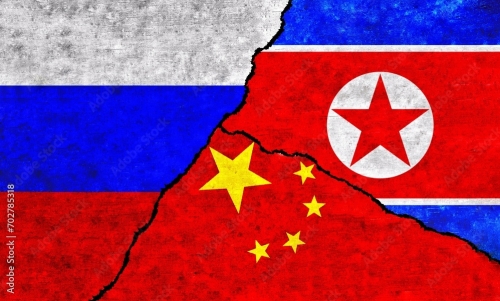
H.3408, introduced in the 2025-26 General Assembly by Rep. Patrick Haddon (R-Greenville), is designed to prevent the ownership of South Carolina land by foreign adversaries of the United States, such as Iran, North Korea, the People’s Republic of China, and the Russian Federation. The threat of hostile countries purchasing American land to gain a strategic advantage in a foreign conflict has come under scrutiny by the general public in the wake of the recent conflict with Iran and general tension with Russia and China. One source calculates Chinese ownership of American land at 380,000 acres, including land in the Palmetto State. The U.S. Department of Agriculture Farm Service Agency issues an annual report for agricultural land.
The proposed bill states that any company or development with a tangible relationship to a U.S. adversary may not own, lease, possess, or exercise any control over South Carolina real estate. If there is any violation of this provision, “a county, city, or town attorney for the locality in which the real estate is located, the Attorney General, or any non-foreign adversary person that was a party to the void transaction or is a subsequent holder of such interest may file an action: (a) to eject the foreign adversary from possession; (b) to quiet title to such property; or (c) for any other appropriate action to ratify the nullification of the transaction.”
The bill clearly lays out the parameters for subsidiaries of U.S. adversaries. The legislation also includes an enforcement mechanism giving the Attorney General the authority to file an action against any hostile country that is attempting to acquire South Carolina real estate. This will ensure that there is a concrete remedy when a foreign adversary attempts to purchase land in South Carolina. Importantly, the bill also defines company and development as “a sole proprietorship, organization, association, corporation, partnership, trust, venture, group, subgroup, or any other entity or organization, its subsidiary or affiliate that exists for profit-making purposes or to otherwise secure economic advantage.” This precise language ensures that businesses with less obvious ties with hostile nations do not fly under the radar. Many Chinese companies, for example, are not directly related to the Chinese Communist Party (CCP) but are still under its control.
According to the National Agricultural Law (NALC), Idaho has passed a law that restricts foreign ownership in the state. The Idaho statute states that members of a foreign adversary country are prohibited from acquiring Idaho agricultural land, forest land, mining rights, and mineral rights. The bill also directs the Attorney General of Idaho to investigate questionable foreign land purchases and to divest state funds from violators of the statute. Idaho’s legislation is a model for South Carolina. Many of the same prohibitions are included, and a similar enforcement mechanism is described. One additional step that Idaho took was to authorize whistleblowers to report violations. Thirty percent of the proceeds from the resulting divestment would go to the whistleblower.
Another state that has restricted foreign ownership is West Virginia. Again, according to the NALC, West Virginia has adopted measures that prohibit foreign advisories from acquiring or owning any interest in West Virginia real property, including mineral rights. Importantly, the bill also applies retroactively. This means that foreign companies that have previously purchased property in West Virginia prior to the date of the bill being signed into law must still divest or face civil action brought by the West Virginia Attorney General.
H.3408 (and Senate companion bills S106 by Senator Rice and S.204 by Senator Massey) are a step in the right direction for South Carolina. Stringent measures combined with effective enforcement will result in the reduction of foreign influence in our state. Key to an effective bill will be giving localities the ability to nullify harmful real estate transactions and incentivizing individuals to report violations of the real estate law. A financial reward for helping to enforce compliance with a new law would go a long way in ensuring that South Carolina’s real estate is safe from hostile foreign adversaries.
Note: The General Assembly is not only concerned with land owned by our enemies, but also with curricula being influenced by them. Rep. Heather Crawford’s H.5504, the Foreign Influence Operations Out of American Education Act, has just passed the House Education & Public Works Committee as of this writing.