
Should Dominion Energy and NextEra Energy Merge?
When NextEra Energy proposed to “combine” (merge) with Dominion Energy and Dominion Energy South Carolina, for a brief moment it was what one observer called a “sleepy energy story.” Utilities merge all the time. So what?
But then elected officials and policy groups from both left and right began to take a closer look at the size of the merger, the track record of the players involved, the timeline, and the potential diminishing of prospects for the reforms (reforms that Palmetto Promise and others have advocated).
Size
If consummated, the merger gambit will be a $67 billion deal, the largest in American history, creating the largest utility in the country. For comparison, when Dominion Energy of Virginia purchased SCANA Corporation (SC Electric & Gas) in 2019, the deal was worth at least $13.4 billion.
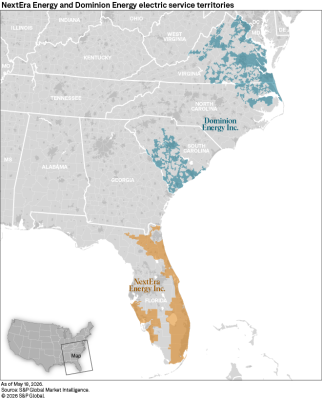
A map of the service areas of Dominion Energy and NextEra Energy shows a electricity customer base primarily in Virginia, North Carolina, South Carolina, and Florida. But NextEra is both a utility and a holding company. It operates in 49 states with a generating capacity of over 40,000 megawatts (MW). All of South Carolina’s energy generation combined yields about 25,000 MW (summer capacity). Outside of electricity, Dominion also provides natural gas service in parts of South Carolina.
The Prized Dominion Territory
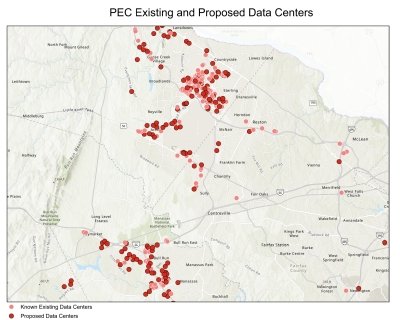
NextEra wants Dominion in part because of data center opportunities in Virginia and South Carolina. Loudoun County, Virginia, and the City of Ashburn are known as Data Center Alley. Loudoun County has 233 data center buildings. About 70% of all internet traffic runs through that area of Northern Virginia. It has the highest data center density in the world.
Imagine that you are running a monopoly utility. Your profits are guaranteed based on your generation assets (“regulated earnings”). Along come data centers. With AI demand growing, you have a lot of predictability—customers that are not going away or reducing their load anytime soon, and are glad to agree to very long-term contracts.
Speed
As for the timeline, the official review to determine if the merger is in the public interest is tight. The utilities announced their intention to merge on May 18, 2026. The South Carolina Public Service Commission (PSC) recently announced a schedule that would require those wishing to intervene to file by September 10. Discovery, Testimony, Rebuttals, and Hearings would be held from late September until early December, with a draft order just after Christmas and a final order on January 29, 2027.
By contrast, the Dominion-SCANA merger intent was announced in January 2018 and completed in January 2019. The proposed merger has attracted significant heat in Virginia, which could extend that state’s process. This has led some South Carolina consumer advocates to call for a delay in the Palmetto State process until North Carolina and Virginia act. Currently, the Virginia State Corporation Commission (SCC) has set a schedule consistent with that of the South Carolina Public Service Commission. But Virginia Governor Spanberger has filed to intervene in the case, stopping just short of calling a special legislative session on the matter that would allow the legislature to extend the SCC timeline by some 60 days.
Players
NextEra is the utility that would run the combined entity. Aside from the fact that Dominion South Carolina would probably rather be run out of Juno Beach, Florida, than Richmond, Virginia, NextEra’s track record is concerning to conservatives because of its aversion to coal and its obsession with wind and solar. NextEra Energy is North America’s largest generator of renewable energy, with 136 wind projects and 8,000 MW of solar. While ramping up renewables, the utility has closed all four of its remaining coal plants over the last ten years, and plans to close all plants running on fossil fuels by the end of 2028.
State energy policy thought leaders wonder if that indicates that South Carolina coal plants at Wateree, Williams, and Cope (dual fuel) would be on the chopping block earlier than scheduled for retirement purely for political reasons. For citizens of those areas, this would mean loss of jobs and loss of property tax revenue. For ratepayers, it could mean reliable power being taken off line prematurely as the plants are closed or idled.
On nuclear, NextEra has been inconsistent, reversing course on Arnold Energy Center in Iowa. It closed the plant in 2020 due in part to storm damage, but filed to reopen it by 2029 after receiving a $1.9 billion loan from the U.S. Department of Energy.
Dominion South Carolina is moving forward with its intention to expand the number of gas-fired power plants, made possible in part by the South Carolina General Assembly’s passage of the South Carolina Energy Security Act (Act 41; 2025).
Reform
Simply put, both left and right are concerned about the prospects for any meaningful reform in the South Carolina energy market with a behemoth like the new NextEra Energy operating here.
The likelihood of reforms in the public interest, such as allowing data centers and/or large energy users to bring their own energy or to bid out their electricity needs and wheel in generation, is already remote in the General Assembly under pressure from Dominion South Carolina. The prospects for change seem nearly impossible against the political forces that would be arrayed by the largest utility in the country.
We assumed this was only our concern. But last week an Associated Press article reported this from Virginia: “Some critics of the merger argue that the combined power of the companies will also give them an outsized influence at the state Legislature, where Dominion alone already holds enormous sway [emphasis ours].”
The stated intent of the merger is in part to profit off of the regulated earnings from the Virginia and South Carolina data center boom. Maximizing profits by directly supplying data centers does not play well with reforms like allowing for behind-the-meter sources or independent power producers to help long-suffering industrial customers break the supply monopoly and access more affordable generation.
Next Steps
Promises are flying in Virginia due to opposition there.
The companies said in a news release that in “response to feedback from policymakers” and others, they would commit to a set of Virginia benefits that includes: a new shareholder-funded co-headquarters tower in the capital city’s downtown, a promise of 600 new jobs, more money toward workforce development and a doubling of previously announced residential bill credits.
According to the South Carolina Public Service Commission timeline, the public will have four opportunities to weigh in on the NextEra-Dominion merger. Those dates are November 5 (Aiken), November 12 (North Charleston), November 17 (Columbia), and December 8, 2026 (Columbia). Information about public testimony, including how to register to testify, may be found here. Please consider letting your voice be heard. This is no longer a “sleepy energy story” and will have a huge impact on the Palmetto State.
Ratepayers in South Carolina can learn about this item on the docket and make their views known by sending a message through the PSC contact system here.