
South Carolina’s Wide-Open Title I Opportunity
The United States Department of Education is releasing guidance on unconventional ways that states can enact some forms of school choice using federal funds or policy. In a March 2025 “Dear Colleague” letter, Hayley Sanon, Acting Assistant Secretary of the Office of Elementary and Secondary Education, reminds states that they may reserve 3% of their Title I allocation to help support direct student services. Taking advantage of this opportunity could be transformational for South Carolina.
What do you mean by “Title I allocation?”
The federal Elementary and Secondary Education Act provides financial assistance to schools to support children from low-income families in Title I, Part A of the Act. Section 1003A of the Act permits states the option to reserve up to 3% of their allocation to support direct student services in eligible schools. Since the amount of funding is based on poverty estimates from the U.S. Census Bureau, each state’s allocation will vary greatly, but almost $18 billion was distributed to states through Title I in 2022.
What are “direct student services?”
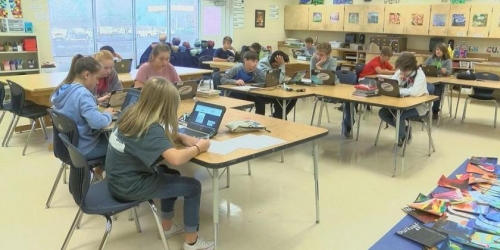
There are several distinct activities that fall under this category: Academic courses not available at a student’s school (including advanced and Career & Technical Education [CTE] courses), credit recovery and academic acceleration courses, postsecondary preparation activities (such as AP testing and dual enrollment costs), personalized learning efforts (including tutoring), and student transportation to a non-Title I school.
Title I, Part A funds can be spent on a wide variety of services and supports for eligible students, including but not limited to, staffing and their required professional development, instructional materials family engagement, childcare, and field trips.
Where do South Carolina Title I funds currently go?
For FY2025, South Carolina received a total of $265,446,936.87 in Title I, Part A funds. This was distributed to nearly all of South Carolina’s public school districts, including public Charter districts. Averaged out across the state, this leaves South Carolina with $7,963,408.11 that could instead be reallocated for direct student services under Section 1003A.
What are other states doing with their funds?
Right now, only Ohio is using a portion of Title I funds to support direct student services. Specifically, Ohio has created the Expanding Opportunities for Each Child Non-Competitive (EOEC NC) Grant. This is a formula-based grant from the Ohio Department of Education and Workforce to districts and is designed to support schools in five key areas: increasing access to career pathways not otherwise available, increasing access to advanced coursework not otherwise available, creating personalized learning experiences for students (such as online learning or STEAM education practices), supporting credit acceleration and credit recovery, and creating multiple graduation pathways for low-performing students. For FY2026, there is an estimated $190,626.36 available for the EOEC NC grant.
Would this make sense for South Carolina?
Absolutely. The intent of the 3% reserve option for Title I schools is to help give parents better control of their child’s education by expanding opportunities.
For example, if a school has a student who wants to take a particular CTE course but cannot because their school does not provide it, that school could reserve their 3% of Title I, Part A funding and use it to pay for that student to take the class at a neighboring school. The same goes for a school looking to support students in taking dual enrollment courses at a local college who may not otherwise be able to afford it.
Using funds to transport students to a non-Title I school helps facilitate a de facto open enrollment in the state. Transportation to a new school is a known barrier to public school choice, especially for families who only have one vehicle or when both parents work full-time. Public Charter and private schools do not get state support to provide transportation, often leaving students who might otherwise benefit from nontraditional school enrollment with no way to get there.
What would be the process for South Carolina taking advantage of using the 3% of the state Title I allocation in this way?
The state retains a good deal of autonomy when it comes to determining how this reserved funding would be allocated. The 3% reserve would function as a block grant – the school districts would have to describe how they would select direct student services providers (colleges, other districts, community organizations, etc., as well as how they would conduct parent outreach to ensure they are aware of these expanded options. The SC Department of Education is then free to allocate funds as they see fit. They may not arbitrarily limit the distribution of these funds, but they may prioritize applications by awarding more points to applicants whose goals align with the state’s. Using the South Carolina Department of Education’s most recent strategic plan, that might look like awarding 10 points to districts who want to expand math or reading tutoring, 7 to those looking to expand access to college and career pathways, and 5 points to others.
Title I provides much needed financial support to districts to help educate impoverished students. States like South Carolina should consider expanding their use of Title I funds under Section 1003A to help connect students to valuable resources that may fall outside of the physical school building – such as advanced tutoring, CTE courses, dual enrollment, or even public school choice. The South Carolina Department of Education can take this opportunity to help direct additional funding to achieve their strategic goals and empower parents to customize their child’s education so they are receiving the educational opportunities and supports they need to thrive.