
Strong Policy Wins in 2025, Even More Momentum in 2026
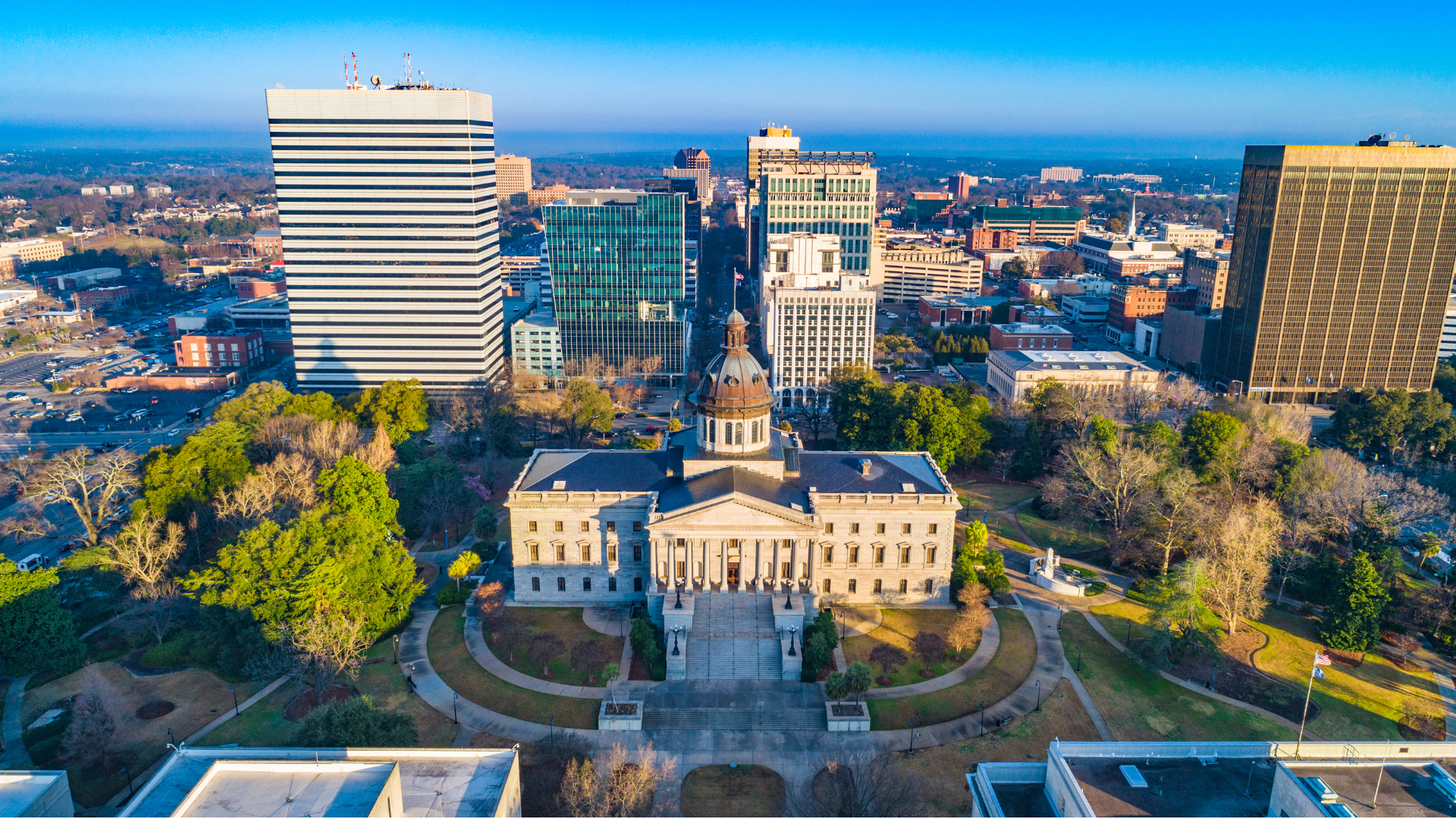
What a year 2025 has been for the state of South Carolina! With a 2026 election cycle well underway (including a series of Statehouse special elections in recent days) and a busy initial year of the two-year legislative session, there has been no shortage of political activity.
As we prepare for the 2026 legislative session, we would like to take a moment to reflect on the impact Palmetto Promise Institute has had on South Carolina individuals and families this year—especially the ways that our Palmetto Freedom Agenda policy blueprint has been enacted into law.
It is only because of our incredible supporters and partners that these wins have been possible.

EDUCATION
Education Scholarship Accounts Restored for SC Families
In perhaps the most significant win of the year, South Carolina families are enjoying the benefits of a school choice scholarship program that is bigger and better than ever before.
After the state Supreme Court ripped education scholarship accounts (ESAs) away from low-income students in the middle of the 2024-25 school year, Palmetto Promise immediately took action. Within days of the ruling, our team traveled to every corner of the state to gather moving video testimonials from affected parents and kids. We collected over 70 pages of written testimony from affected families and shared it with state legislators. As a result, school choice became the first item on the agenda for the General Assembly’s 2025 legislative session, with a series of rare pre-session Education committee meetings that ensured a revamped choice program (contained within S.62) made it to the Senate floor the first week of session.
Our efforts went beyond just policy; it was personal. Under the leadership of President & CEO Wendy Damron, Palmetto Promise raised over $2.5 million in private donations for a Rescue Fund so no child would be forced to leave his or her school as a result of the mid-year court decision.
Our efforts paid off. In May 2025, Governor McMaster signed into law an expanded ESA program—the Education Scholarship Trust Fund (ESTF) that 10,000 students are currently enjoying, with thousands more scholarships on the way in the coming years.
Palmetto Promise’s work to restore education freedom in South Carolina was recognized with the top national award from the State Policy Network—a national cooperative of state-based policy organizations—over the summer. We are seeing South Carolinians embrace this new education program, with students from every single county applying, and a program waitlist nearing 10,000. Applications for the 2026-27 school year open in January. You can visit SCSchoolChoice.com for more information.
Public School Choice Opens Up
A lesser-known benefit of the ESTF law the inclusion of a public school choice (“interdistrict open enrollment,” or for our purposes, just “open enrollment”) provision for all SC students, not just those in the ESTF program. The expansion of public school choice was a top priority in our Palmetto Freedom Agenda, and over the summer, we reported on the impact of the new private choice law on public school choice.
S.62 required the South Carolina Department of Education to develop and publish model guidelines for how school districts can enact public school choice policies that will allow students to transfer between public schools if space is available. We recently submitted a detailed public comment on how these regulations can be strengthened even further, and we look forward to continuing to work both with the South Carolina Department of Education and lawmakers on further securing families’ newly-established right to the choice of a variety of public school options.
School Boards Finally Required to Livestream All Meetings
In July 2024, our team conducted a first-of-its-kind assessment of all school districts in the state of South Carolina to see which districts make their school board meetings accessible online. A common critique of legislation mandating livestreaming for school boards has been that most districts were already streaming meetings, so it was argued that a law of this kind was unnecessary.
Our research found that to be false.
Only 13 school districts met our “gold standard”—actively livestreaming their meetings and having a codified rule in their school board policy manual that meetings must be streamed. Our research revealed that 44 school districts livestreamed meetings but had no requirements “on the books” to do so. This meant that at any point, any of those districts could have decided to hold a particularly controversial meeting without streaming video online (and we have heard from concerned citizens that this is a real and frequent problem)! 11 school districts did not live stream their meetings, and did not have any policies requiring them to do so. 5 school districts actively violated their own board policies requiring live-streaming, meaning they did not provide any method for citizens to access board meetings online.
Policy Analyst Felicity Ropp testified before the House Education Committee this spring and shared our findings with legislators. She emphasized a key point that we made in our 2024 report—that the real heavy-lifting of school board policymaking is often done in committee, and that all meetings subject to FOIA (the Freedom of Information Act) should be required to be livestreamed. The resulting legislation, S.77, was signed into law this May and included every one of our recommendations.
What’s On Deck for 2026:
- Parent Rights/Curriculum Transparency. Parents should be able to go online and know the curriculum being taught in their child’s school. A new library book regulation that restricts sexually explicit material from being available in our public schools is a great first step toward this goal, but at Palmetto Promise we believe that we need to fully protect parental rights by codifying those rights into state statute, not just including them as a budget proviso that must be renewed year-to-year (as we have for the past decade).
- Higher Education Reforms. Higher education needs reform as well. Among these reforms are requiring members of university boards of trustees to be properly trained, ensuring that students are indeed reading the nation’s founding documents as a part of their college work as state law requires, and that academic programs are reviewed regularly so that poorly enrolled majors can be eliminated. We are also looking for additional free speech protections that will allow student political views to be expressed on campuses without facing discrimination from school administrators or worrying about protestors attempting to “shout them down.”
- School Choice Protection & Expansion. Now is not the time to back down from our state’s support of school choice. In fact, we need to advance the education freedom cause even further! South Carolina voters are overwhelmingly in favor of universal ESA scholarships. That would mean that any student may enjoy a customized education, not just those in certain zip codes or income brackets. Should they choose to do so, legislators have the ability to fund more ESTF scholarships in the state budget than those referenced in the authorizing legislation! With such a long waitlist and high demand from parents, this should be a top priority.
- Charter School Funding Protection. In 2025, traditional public school districts—even shrinking ones—were successful in shifting funds away from charter schools. Make no mistake. This is a penalty for Charter growth and success. We will work to protect the existing funding formulas for charter schools and to increase funding wherever possible.
- K-12 Grading Policy Reforms. Districts across the state restrict a teacher’s ability to assign honest grades to their students. They do this by implementing “grade floors” that establish a minimum score for students, even those who do little or no schoolwork. Grades should reflect the actual work that students do, so the parents, teachers, and administrators have an accurate picture of the students’ academic abilities and support needs. Similarly, schools should not be able to abuse credit recovery programs for these students that allow them to earn credit for these classes without requiring them to demonstrate mastery of the content. A statewide, cross-district reform to state grading policies is long overdue.

HEALTHCARE
South Carolina’s bureaucratic healthcare maze consolidated
Governor Carroll Campbell started a reorganization of South Carolina’s convoluted state agency structure back in the 1990’s. In 2023, South Carolina lawmakers took a step Governor Campbell would have applauded by splitting the behemoth Department of Health and Environmental Control (DHEC) into two separate agencies.
The next step was to assess all South Carolina state agencies performing health-related operations and see how that bureaucracy could be streamlined. After an end-of-session delay in 2024 (a battle in which Palmetto Promise was heavily involved), this agency realignment became a top priority in 2025, with S.2 taking concerns from the previous year into account. Dr. Oran Smith was asked to testify in both the Senate and House on this legislation, sharing the history of South Carolina government restructuring and explaining the urgent need for ongoing reform.
This time around, agency restructuring stuck, and the General Assembly passed a law consolidating the Department of Mental Health, the Department of Disabilities and Special Needs, and the Department of Alcohol and Other Drug Abuse Services into one, cohesive Department of Behavioral Health and Developmental Disabilities.Now, South Carolinians seeking services from these agencies will find the system much easier to navigate, instead of being bounced back and forth between bureaucratic agencies that don’t speak to each other or share information.
Now, the next step is to take this restructuring momentum to seek a true “one door” model for South Carolina’s social services and workforce programs, so that citizens in need may walk into one government office and access all the help they require in one place. Louisiana is a model for how this can be done effectively and efficiently.
What’s on Deck for 2026:
- The General Assembly should pass a reasonable Scope of Practice Reform bill that would allow certain highly trained Physician’s Assistants and Advanced Practice Registered Nurses (like Nurse Practitioners) to have full practice authority in some areas of the state with some patient populations. Our new report on this topic lays out a proposal for how to move forward on this controversial issue. Dr. Oran Smith was invited to testify on this plan before the Senate Medical Affairs committee in the fall.
- South Carolina should also get serious about reforms Palmetto Promise has advocated for years: welcoming telehealth across state lines, price transparency in medical billing, and the Right to Shop for the best price for health procedures.
- Restricting the use of Non-Compete Contracts when they unfairly shackle doctors to hospital systems should also be a priority.
- Legalizing flexible portable benefit plans for gig economy workers. If allowed, employers like DoorDash can offer these voluntary benefit accounts for their workers, and employees can move from job to job or gig to gig without losing their healthcare or retirement investments.

ENERGY
South Carolina’s Nuclear Renaissance is Beginning
In 2025, South Carolina lawmakers made it clear that nuclear energy is the future of our state. The Palmetto State is leading the nation in reviving nuclear power and embracing new technology with Small Modular Reactors (SMRs).
By passing S.51, which encourages state-owned Santee Cooper to request private bids to restart their abandoned V.C. Summer II and III project, lawmakers made it clear that South Carolina is fertile ground for President Trump’s plan to unleash American energy. PPI Research Fellow Jennifer Buckley was published in the Post and Courier discussing this exciting proposal. Senior Fellow Dr. Oran Smith outlined a broader industrial energy policy, including how to power data centers, just a few weeks ago in the P&C.
Additionally, in their omnibus energy bill passed this year, legislators included key provisions that champion Small Modular Reactors (SMRs) as a critical part of our state’s future energy portfolio. Palmetto Promise, with our 2024 report on SMRs, was the first to discuss how SMRs could transform South Carolina’s energy future. Our research sparked momentum that ultimately became law in H.3309 this year.
Both of these wins give us great hope for South Carolina’s future. American-produced nuclear energy holds the key to prosperity, and the General Assembly this year has embraced this philosophy wholeheartedly.
What’s On Deck for 2026:
- To truly arrive in the 21st century, the legislature should enact buyer choice for all large and industrial electricity load users (like in Georgia). This is a great way to make sure large energy users (such as data centers and manufacturing plants) are not a burden on the electricity grid.
- Create a Palmetto Energy Imbalance Market (EIM) to help manage electricity flow across all utilities in South Carolina in real time.
- Allow data centers to build their own energy generation capacity to meet their own needs off the grid and “behind the meter.”

TAX & BUDGET
Income Tax Cuts—And More on the Way!
We have argued since 2015 that South Carolina’s individual income tax rate is incongruent with our neighbors in the Southeast. This hurts our competitiveness for residents and businesses looking to locate in the region.
In 2022, the General Assembly passed monumental legislation to incrementally reduce South Carolina’s income tax rate from 7% to 6%. And in both the 2024 and 2025 state budgets, legislators have chosen to accelerate that tax cut timeline and bring the rate down even faster than planned. So now, our highest bracket for individual income taxes sits at 6%. But as the states around us adopt tax reform too, the trend is clear: it’s time to go even lower.
Cue H.4216, introduced by legislative leaders this spring. Its initial version would have moved South Carolina from a progressive income tax code with a top rate of 6% to a 3.99% flat rate for all, with revenue triggers to lower that down to 2.49%, which would be the lowest flat tax rate in the nation. Most importantly, that bill broadened the tax base by switching to federal adjusted gross income (AGI), which is the tax starting point used by 32 other states, including Georgia and North Carolina.
The South Carolina House ended up passing a modified version of the bill, which would move South Carolina’s highest-in-the-southeast income tax to a two-tiered rate of 5.39% and 1.99%, still switching our tax base to Adjusted Gross Income (AGI).
The bill included a pathway for our state income tax to be reduced to 1.99% then all the way to 0% in the coming years.
An economic impact analysis by Palmetto Promise found this plan would make South Carolina’s GDP grow by $360 million in 2026 and average $920 million annual growth between 2027 and 2030. Our analysis, distributed on the SC House floor during debate, was essential to this legislation passing the House in 2025.
Now, in 2026, the Senate takes up the proposal. They have already expressed interest in a broader, more aggressive tax reform bill—so for all our fiscal watchers out there, 2026 is going to be an important year in South Carolina tax policy.
What’s on Deck for 2026:
- As we have been saying since 2015, a Comprehensive Tax Reform bill could address broader and connected problems, including high commercial property taxes, a high and imbalanced sales tax, an unnecessary stock tax, high property taxes on second homes, nonresident income taxes, as well as issues of conformity with the federal tax code in the wake of the passage of the One Big Beautiful Bill (OB3). We cover all tax issues in our report from January 2025, Achieving Prosperity, Stability, and Fairness.
- The legislature should also address crucial issues that continue to be shifted to the back burner, like Unfunded State Employee Pension & Healthcare Liabilities and rising Local & State Debt.

QUALITY OF LIFE
A Significant First Step on Lawsuit Reform
Palmetto Promise has championed lawsuit reform (also known as tort reform) since at least 2019, and this year, progress was finally made toward reforming our state’s broken civil liability system.
Our state has led the nation’s list of “judicial hellholes,” and calculations by Palmetto Promise Institute revealed that South Carolina household pays a hidden tax of $3,181 annually, in the markup businesses are forced to add to the prices of their products to cover the cost of lawsuits against them, many of them frivolous. South Carolina’s lawsuit industry is out of control. Plaintiff attorneys benefit from outrageous damage awards while bars close and job-creators are driven away. Our bombshell report Sandlapper Shakedown breaks down exactly what’s wrong with South Carolina’s civil liability laws and how it scares job creators and forces our state’s mom and pops out of business. Palmetto Promise took to the digital airwaves with an extensive campaign to educate South Carolina citizens about the dangers of the existing system. And let’s put it this way: our campaign struck a nerve with the billboard lawyer crowd!
After months of debate and negotiation, South Carolina lawmakers finally passed H.3430, a milestone piece of legislation that will undoubtedly be transformational for justice (read our full analysis here). It includes relief for bars and restaurants’ liquor liability insurance, a fairer jury verdict form, elimination of legal loopholes unfairly exploited by trial lawyers, and greater accountability for intoxicated drivers.
However, this is just the first step toward reform. There are many needed reforms that were left on the cutting room floor. The South Carolina House of Representatives, as part of the compromise to reach the language in H.3430, has pledged to take up additional reforms in 2026, and a Tort Reform Ad Hoc committee has been meeting this fall to jumpstart that process.
What’s on Deck for 2026:
- The General Assembly should take the next step in Tort Reform to protect businesses from unfair litigation by completely eliminating the concept of Joint & Several Liability from South Carolina law. This will drive insurance rates down. See our report Sandlapper Shakedown and our recent analysis of H.3430 for details.
- Judicial reform is the talk of the Statehouse these days. We feel strongly that the most important aspect lawmakers can undertake in 2026 is Magistrate Reform. These judges interact with the public more than any other court, but summary court judges (magistrates) have scandalously low training requirements and a dubious appointment process.
- To protect justice and to prevent personal property from being seized without criminal charges, Civil Asset Forfeiture should be abolished in South Carolina.
- More South Carolinians can go to work immediately without unnecessary government barriers if the Palmetto State passes Universal Occupational License Recognition. Cosmetology licensing is particularly in urgent need of reform (watch our recent testimony on this topic).
- A Regulations in Need of Scrutiny (REINS) style bill has already passed the House. This regulatory rollback, which protects businesses and puts the legislature in control of state agency regulatory actions, is now before the Senate (read our recent coalition letter on this bill).
- Local elections should be held on standardized days to encourage voter turnout and save taxpayer dollars.
- The General Assembly should examine the opportunity presented by Regulatory “Sandboxes” that will allow the state to attract more financial services (“Fintech”) firms. Digital liberty should also be protected.
- And finally, COVID-era reforms around alcohol pickup and delivery should be made permanent.
Conclusion
This is a lot, we know—Palmetto Promise has been busy with the Palmetto Freedom Agenda in 2025!
But this is just the beginning. We are committed to continuing the momentum into 2026. In the new year, there are wide-open opportunities to enact lasting policy changes that will secure greater freedom and opportunity for generations to come. Our Palmetto Freedom Agenda is more important now than ever before.
You can stay in the loop on everything happening in the Statehouse in 2026 by subscribing to our weekly email newsletter.
Want to help us continue the work in 2026? Remember us in your year-end giving.